
How to Plan a South African Safari Over 50: 5 Easy Steps for First-Time Adventurers
09/14/2026||
If the words South African safari bring up images of rough roads, complicated logistics, malaria worries, and waking before sunrise, you are not alone. Safari can sound intimidating, especially when you are used to planning trips around comfort, connection, and a little well-earned luxury.
Here is the good news: you do not have to be an extreme adventurer to enjoy an unforgettable safari.
South Africa is one of the most welcoming destinations for a first safari. You can pair the untamed beauty of Kruger National Park with the cosmopolitan energy of Cape Town and the lush, delicious pleasures of wine country. You can see elephants at sunrise, enjoy a beautifully prepared dinner beneath a starry sky, and still sleep in a comfortable bed by nightfall.
That is the magic of South African adventures. They offer wonder without requiring you to abandon common sense, or your creature comforts.
Here are five easy steps to help you plan your first safari with confidence.
Step 1: Choose the right season and route
The easiest way to make safari travel feel manageable is to begin with the big picture: when will you go, and how much ground do you want to cover?
For many first-time travelers, a 10- to 12-day itinerary offers a wonderful balance:
- Three or four nights in Cape Town
- Two nights in the Cape Winelands
- Three or four nights at a safari lodge near Kruger
- One or two flexible nights for travel, rest, or a gentle finale
Cape Town is an ideal starting point. You can recover from your international flight, admire Table Mountain, explore the V&A Waterfront, and settle into the rhythm of South Africa before heading into the bush.
From there, continue to Stellenbosch or Franschhoek. The vineyards are lush, the food is memorable, and the pace is gloriously unhurried (which is sometimes exactly what a new chapter needs).
Then comes Kruger or the surrounding Greater Kruger reserves, where your days may include guided game drives, quiet coffee at dawn, and the thrill of spotting wildlife in its natural habitat.
When should you go?
The dry season, generally May through October, is often considered excellent for wildlife viewing. Vegetation is thinner, and animals frequently gather around water sources. September and October can offer a particularly appealing balance between safari conditions and pleasant weather in Cape Town.
April and May can also be attractive shoulder-season options.
Of course, the best dates depend on your priorities, budget, health considerations, and preferred pace. A travel professional can help you weigh those details instead of asking you to solve the entire puzzle alone.
For additional planning context, this first-timer’s South Africa safari roadmap offers a helpful overview of routes and timing.

Step 2: Select a safari style that matches your comfort level
Safari is not one single experience. It can be rugged and independent, or polished, supported, and wonderfully easy.
For a first-time safari over 50, I typically recommend choosing a private reserve or well-regarded lodge with guided game drives. This is the safari cheat code.
Your guide handles the navigation, understands animal behavior, and knows where to look for wildlife. You simply settle into the vehicle, keep your eyes open, and let the landscape unfold.
A private reserve may also offer:
- Twice-daily guided game drives
- Off-road viewing where permitted
- Night drives
- Optional walking experiences
- Fewer vehicles at wildlife sightings
- Lodge staff who help with every detail
Kruger National Park itself is extraordinary. A self-drive safari can offer independence and flexibility, but it also requires more planning, navigation, and comfort with long driving days.
Neither option is “better.” The right option is the one that lets you stay present.
A note about malaria-free options
Some travelers prefer a safari destination outside a malaria-risk area. South Africa offers alternatives such as Madikwe, Pilanesberg, and certain Eastern Cape reserves. These can be worth considering depending on your itinerary and personal health profile.
Always speak with your physician or a qualified travel health clinic well before departure. Ask about malaria prevention, routine vaccinations, prescriptions, long flights, and any existing health conditions. Good preparation is not fear. It is freedom.
Step 3: Build in comfort, connection, and breathing room
A common mistake is trying to see everything at once. Cape Town, wine country, safari, Johannesburg, Victoria Falls, and a beach extension may all sound tempting, but your itinerary should not feel like a relay race.
Safari days often begin early. Very early. You may leave the lodge before sunrise when the air is cool and the bush is stirring. After a game drive, you will want time to rest, enjoy lunch, read by the pool, or share stories with fellow travelers.
Plan for spaciousness.
A thoughtful itinerary might include:
- Arrival in Cape Town: Give yourself time to recover from the flight.
- Cape Town exploration: Add a mix of scenic highlights, culture, and relaxed meals.
- The Winelands: Savor vineyard views, local cuisine, and a slower pace.
- Kruger-area safari: Stay at least three nights so you have multiple opportunities for wildlife viewing.
- A gentle departure: Add a buffer night before your international flight whenever possible.
This approach is especially valuable for women traveling solo or with friends. You have room to connect. You have room to change your mind. You have room for the unexpected magic that no itinerary can predict.
And please remember: you do not have to participate in every activity. If a walking safari feels like too much, enjoy the lodge. If you want to skip one early drive, sleep in. Adventure travel for women should be empowering: not a performance review.
Step 4: Pack for comfort, layers, and real life
Packing for safari does not require a new wardrobe or a khaki identity. You need practical clothing that works across changing temperatures and relaxed lodge settings.
Think light layers:
- Neutral-colored pants or comfortable trousers
- Lightweight long-sleeve shirts
- A warm fleece or sweater for early mornings
- A light rain jacket
- Comfortable, broken-in closed-toe shoes
- A wide-brim hat with a secure strap
- Sunglasses and high-SPF sunscreen
- Insect repellent
- A swimsuit for the lodge pool
- One slightly dressier outfit for dinner
Earth tones such as olive, tan, beige, and gray are useful because they blend comfortably into the environment. But comfort matters more than following a strict safari fashion rule.
You may also want:
- Binoculars
- A small daypack
- A camera with a zoom lens
- Extra batteries or a power bank
- Lip balm and moisturizer
- Prescription medications in their original labeled containers
- Copies of your prescriptions and travel documents
The goal is simple: pack light enough to manage easily, but thoughtfully enough to feel prepared.
For a broader overview of what a first safari is actually like, this beginner’s South Africa guide is a useful companion read.

Step 5: Work with a travel planner who understands your “why”
The final step is the one that can transform safari from an intimidating idea into a joyful reality: do not plan every detail alone.
South Africa involves international flights, regional connections, lodge transfers, park logistics, health considerations, travel insurance, and carefully timed reservations. Add in your personal preferences: your ideal room, food needs, mobility considerations, preferred activity level, and budget: and the planning can quickly become a second job.
You deserve better than a spreadsheet marathon.
A skilled travel planner can help you:
- Compare Kruger lodges and private reserves
- Choose the right safari style and activity level
- Build in rest days and comfortable transfers
- Coordinate Cape Town and wine country
- Review seasonal considerations
- Arrange trusted local guides and transportation
- Plan for special celebrations or milestone moments
- Provide human support before and during your trip
At Sayra Journeys, we believe travel after 50 is not about proving how adventurous you are. It is about deciding what adventure means to you now.
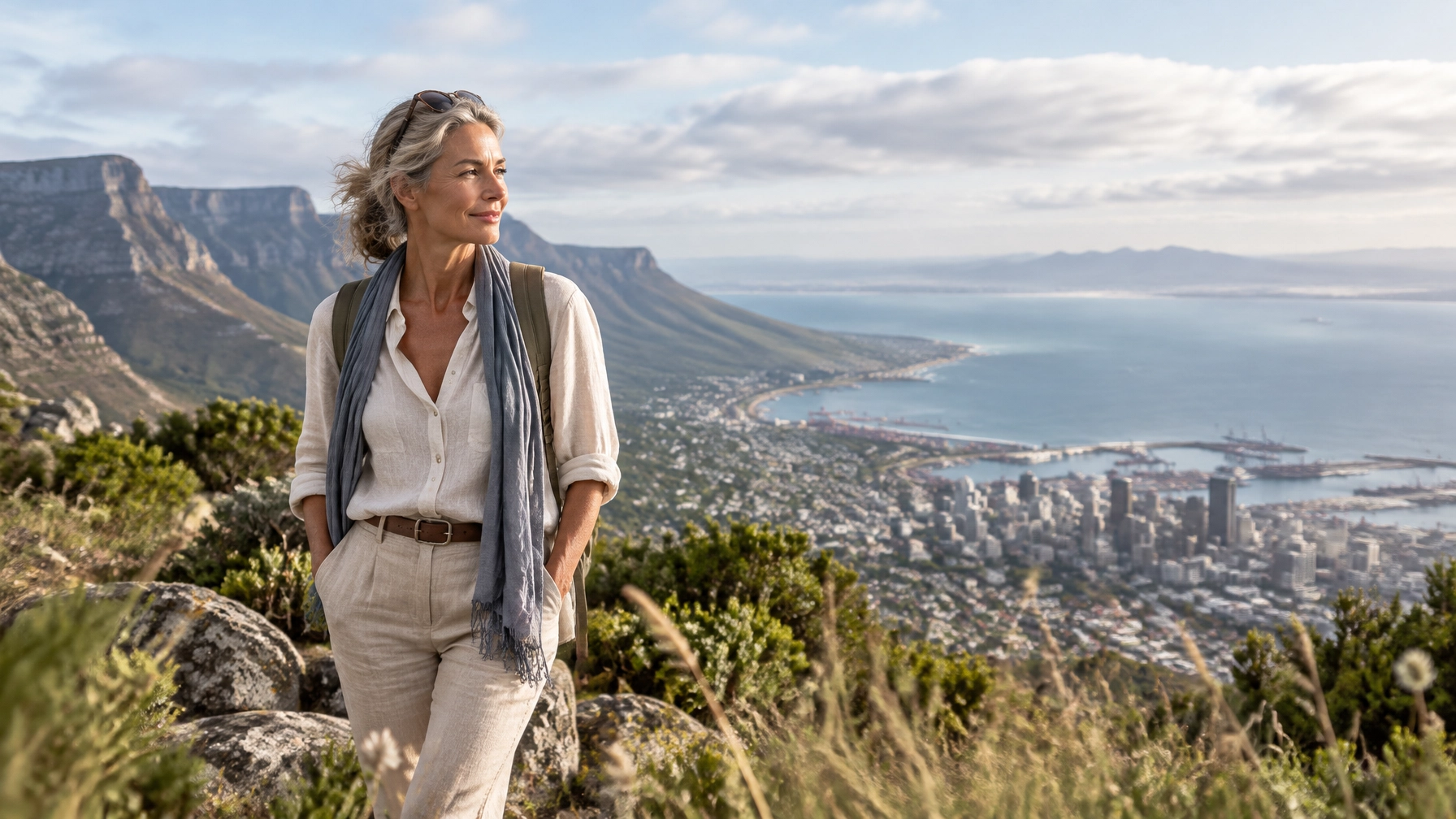
Maybe it means watching a lion move through golden grass while your coffee cools beside you. Maybe it means a private dinner in the Winelands with your closest friends. Maybe it means standing above Cape Town and realizing that the life ahead of you is still wonderfully wide open.
Our South Africa destination planning combines Cape Town, world-class wine country, and unforgettable safari experiences into a journey designed around your comfort, curiosity, and celebration. We can help you travel solo, with a partner, or with a small group of women who are ready to make big memories together.
Closing Thought
Your first safari does not need to begin with absolute fearlessness.
It can begin with a question.
What if I let myself go?
Then take the next simple step. Choose your dates. Share your hopes. Ask for guidance. The wild is waiting: and so is the next great chapter.
Ready to turn your South African safari dream into a beautifully planned reality? Start with a complimentary discovery call with Sayra Journeys.